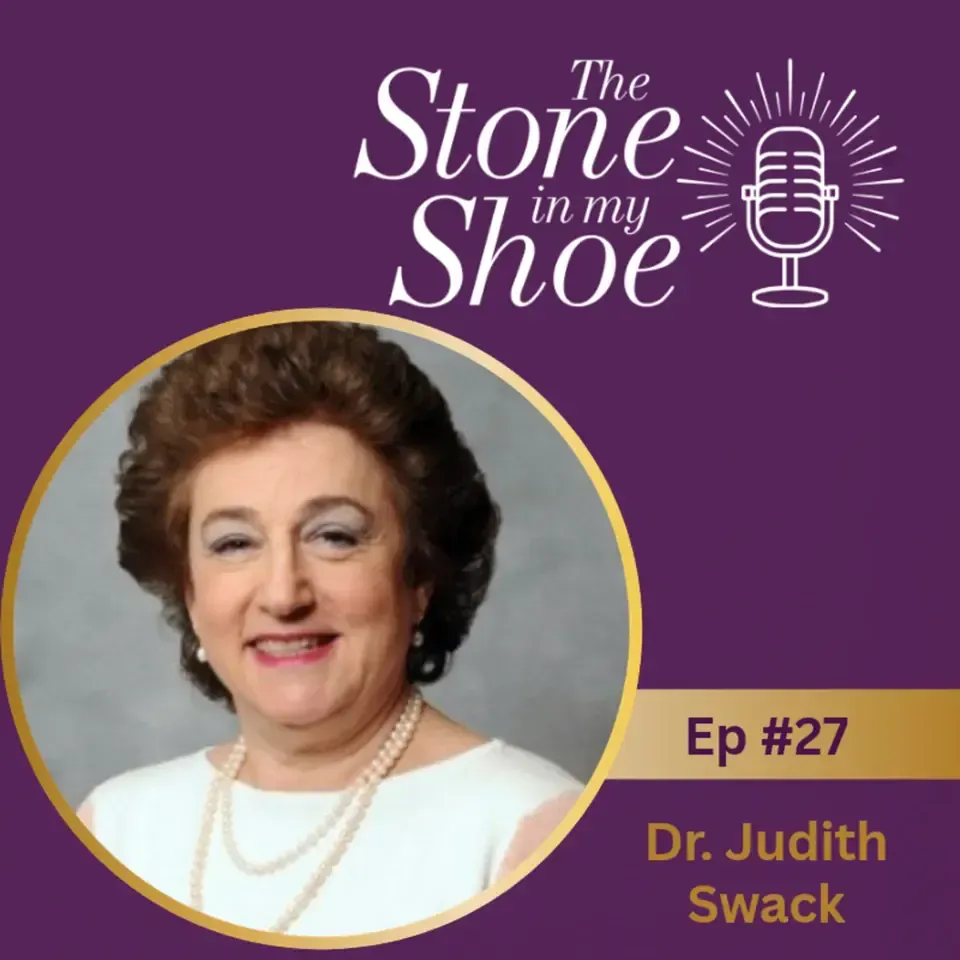
Clear Trauma Now On The Moral Injury Support Network Podcast

Judith A. Swack, Ph.D. • August 4, 2026

Moral Injury Support Network Podcast

Season 4 | Episode 13: Clear Trauma Now

Listen on Apple Podcasts

Trauma doesn’t just live in memories. It hides in the body, locks into identity, and quietly runs decisions until we feel like we’re fighting ourselves.

Dr. Daniel Roberts sat down with Dr. Judith A. Swack, PhD, a biochemist and immunologist who became a pioneer in energy psychology and mind-body healing. Judith created Healing From the Body Level Up (HBLU), a practical model that treats us as multi-level beings: conscious mind, unconscious mind, body, and soul. When those levels fall out of alignment, “knowing better” doesn’t fix the problem, because talk and logic don’t automatically clear fear, shame, or stress patterns stored deeper down.

In this episode, we dug into two hands-on tools that listeners can actually use: muscle testing to get a reliable readout from the body, and tapping (EFT) to calm trauma activation fast, including those middle-of-the-night adrenaline spikes. Then we turned to the heart of moral injury in veterans: the painful beliefs that get woven into identity after combat, including the crushing internal verdict “I am a murderer.” Judith shared how amend-making forgiveness, drawn from the Jewish practice of teshuvah, can help repair internal betrayal and reduce guilt when the inner levels finally become congruent.

We also talked about trauma from sexual assault, the importance of asking respectful inner questions, and why reproducible, step-by-step protocols matter for skeptics who want something grounded and repeatable.


By Authority Magazine Editorial Staff July 23, 2026
As a scientist I appreciated the NLP concept that all damage has structure, and that specific damage patterns can be cleared using reproducible protocols.
Text reading “YOUR BODY REMEMBERS TRAUMA...” with two portrait photos on dark background.
By Judith A. Swack, Ph.D. July 10, 2026
Your body remembers trauma. Hear Dr. Judith Swack discuss Healing the Nervous System & Unconscious Mind on the James Granstrom Podcast - Super Soul Model series
Logo reading “tonic for what ails you” beside a bald man in glasses with folded arms on a gray textured background
By Terry Furman June 29, 2026
The Hidden Cause of Erectile Dysfunction On the podcast, The Tonic, terrestrially broadcast on June 20 and 21, 2026 on AM740 and FM 96.7 in Toronto. Topics covered on the show track the lifestyle articles and themes published in The Tonic Newsletter and on the Tonic Website. We’ll discuss why you should take vitamin B12 with Master Herbalist, Joel Thuna, the hidden cause of erectile dysfunction with biochemist Dr. Judith Swack, the impact of thyroid disease with patient advocate Joanne Koskie and Thyroid Foundation of Canada President Laz Bouros, and how epigenetics can impact your biological age with fitness coach Jason Nelson. where we discuss healing Diagnosis shock and original trauma Performance anxiety Instead of treating the cause, men treat the anxiety The physical sources of erectile dysfunction Muscle testing “Releasing Stuck Energy”  “When a man experiences erectile dysfunction for the first time, the physical symptom is often only the beginning,” Swack says. “The real problem can become the shock of what he tells himself it means. Many immediately jump to, ‘I'm impotent,’ or ‘I'll be rejected.’ That emotional imprint can create anticipatory anxiety that follows them into every future sexual encounter.” The result is a cycle in which anxiety itself becomes a contributing factor to ongoing performance issues. “Sex becomes tinged with anxiety,” she explains. “The fear of it happening again can become a self-fulfilling prophecy.” She emphasizes that ED is rarely a one-size-fits-all condition. “For some men, there may be emotional conflicts, relationship concerns, unresolved trauma, hormonal issues, or physical injuries contributing to the problem,” she says “If you don't address the root cause and the original diagnosis shock, you're often only managing symptoms.” The same trauma response, she says, frequently appears in patients diagnosed with any type of serious illness.