Emotions and the Immune System
We live in a world that we are made to live in. We are designed to survive, and we have built-in mechanisms that enable our bodies to live in this world. Part of what we live with in this world is the existence of germs (pathogens). Germs can be viruses, bacteria, parasites, or unicellular organisms like yeast, fungi, and amoebas.
The Body’s First Lines of Defense
What prevents us from getting infected by germs? Our first line of defense is biochemical and physical. Skin keeps bacteria out. The sebaceous glands in your skin are oil glands that keep it moist so it does not crack.
The body’s openings to the world- your mouth, nose, eyes, vagina, urethra, and bladder- all have protection. Your eyes make tears, and tears have lysozyme in them. Lysozyme causes bacterial cell walls to dissolve. One teardrop in a gallon of water will kill bacteria. That's how powerful your tears are. This is why you walk around with your eyes wide open, yet you rarely get eye infections. Saliva contains lysozyme and mucins, which are heavily glycosylated proteins (causing the sliminess). Mucins coat bacteria and prevent them from attaching to and entering your cells. Spermine in the semen sterilizes seminal fluid. The vagina, urethra, and bladder have mucous membranes.
In the sinuses and lungs, mucus traps germs, while the little wavy tails of ciliated cells move material in the lungs up into the throat, where it is swallowed and digested in the stomach. Commensal organisms in the gut and vagina are healthy bacteria that help digest food, make vitamins (including vitamin K, which helps in blood clotting), and prevent gut and vaginal infections by outcompeting pathogenic organisms. This is why it is important to take probiotics when you take antibiotics. Certain probiotics even help protect your skin and prevent acne.
The Immune System Is the Back-up System
The immune system is the backup system if germs get through the physical and biochemical defenses. The immune system is composed of white blood cells and proteins that circulate through the body to eliminate anything it sees as foreign, including germs, cancer cells, tissues, and objects that are not made in your own body. The immune system has multiple layers of defense.
It starts in the bone marrow, where stem cells produce all the types of blood cells: white blood cells (which are the cells of the immune system), red blood cells (to carry oxygen), and platelets (for blood clotting). Immature blood cells are released from the bone marrow, travel to different organs to mature, and then circulate in the blood. For example, T cells mature in the thymus, and B cells mature in the spleen and lymph nodes. Immature red blood cells originally have a nucleus. They mature in the circulation where they lose their nucleus to make more room for the hemoglobin to carry oxygen.

Day 0: Pathogen Passes 1st line of Defense, Gets Eaten by Amoebocytes
When germs first enter your body, the first layer of immune defense is the amoebocytes, single cells that are like little amoebas. These are the cells of the monocyte/macrophage system and polymorphonuclear cells (socalled because they have multi-lobed nuclei), which include neutrophils, eosinophils, and basophils. When they encounter a germ, they surround and engulf it, digest it, and spit out the pieces. I think of these as PacMan cells, and they are in every tissue in your body. These cells usually clear up an infection in one to three days.
Days 1-3: Pathogen Escapes Amoebocytes, Is Killed by Natural Killer Cells
There is another class of white blood cells called lymphocytes: small round cells which include Natural Killer (NK) cells, T cells, and B cells. If a virus gets into the body and the PacMan cells did not clear them on day one, then the virus will invade the cells. The virus takes over the cell’s replication system, multiplies, buds out, bursts open the cell membrane, and continues to spread. Infected cells fight back by releasing Type 1 interferons, which activate NK cells to kill infected cells before they can manufacture too many viruses. Interferons spread to the surrounding cells, making them resistant to infection. Activated NK cells then release Type II interferon, which activates macrophages to come clean up debris, helps other immune cells locate the infection, and forces the infected cells to flag themselves so they can be easily recognized.
Natural Killer cells also recognize and kill cancer cells.
Natural Killer Cells, Stress, and Trauma
When a traumatic experience (physical or emotional) occurs, it triggers the fight/flight/freeze reaction, causing the release of cortisol in the bloodstream. High levels of cortisol circulate to the thymus and kill immature immune cells. In addition, 24 hours after a traumatic shock, the number of circulating NK cells drops by half. This explains why, typically, 24-48 hours after a traumatic shock, people get sick with viral upper respiratory infections. NK cells also detect and kill cancer cells. The body produces cancer cells all the time, but they get killed by NK cells as soon as they are formed. When NK cell function is inhibited by trauma, it can allow cancer cells to survive, take root, and grow.
The theory that severe traumatic shock could predispose one to getting cancer was originally proposed in 1981 by Dr. Ryke Geerd Hamer following his own testicular cancer diagnosis a year after his son was killed. Dr. Tad James, a pioneer in the field of Neuro-Linguistic Programming, reported that he found cancer to occur one to three years after a third major loss trauma. In my own practice, I also find that cancer is first diagnosed one to three years after a third major loss trauma.
How long does it take for NK cell function to recover after a traumatic experience? For a single, acute instance of severe psychological or physical trauma, NK cell function typically returns to normal baseline levels within 1-24 hours, while recovery from severe, prolonged traumatic stress can take several weeks to months.
Days 3-7: Pathogen Still Active, Body Activates Killer T Cells and Helper T Cells
If the virus is still in your body three to seven days later, it triggers T cell and B cell activation. Remember that the macrophages have been digesting the germs, spitting out the pieces, and carrying the fragments (antigens) on their cell surface. They are known as antigen-presenting cells (APCs).
Killer T (CD8) cells. When an APC bumps into a Killer T cell that recognizes that germ fragment, it activates the T cells to start multiplying and killing that type of germ in four to seven days.
Killer T Cells, Stress, and Trauma
Psychological trauma and chronic stress inhibit killer T cells from properly activating, multiplying, or clearing tumor cells, weakening the body’s natural anti-cancer immune surveillance system.
Days 7–21: Pathogen Still Active, Helper T Cells Activate B Cells, B Cells Make Antibodies
Helper T (CD4) cells. When an APC bumps into a helper T cell that recognizes the germ fragment (antigen), it activates the helper T cell to make more of that antigen-specific T cell. Then the helper T cell finds a B cell that recognizes the same germ fragment and activates the B cells to make antibodies (immunoglobulins) specific to that germ.
Antibodies are proteins shaped like a Y. The two arms of the Y are called the Fab (Fragment antigen-binding) region, and they are specific to the germ they were made against. The tail of the Y is called the Fc (Fragment crystallizable, but I think of it as the Fragment constant) region because it has a standard structure.
The first wave of antibodies, immunoglobulin M (IgM), starts being produced on day four, with the first peak at day seven. The second wave of antibodies, immunoglobulin G (IgG), starts being produced on day 14 and peaks two to three weeks after exposure.
How Do Antibodies Work?
- Catch germs: Germs can be wiggly and hard for the amoebocytes to catch. Amoebocytes have an Fc receptor on their surface. Antibodies sit on the surface of the amoebocyte and act like a fishing rod as the Fab portion of the antibody binds to the germ, allowing the amoebocyte to catch and reel in the germ. Antibodies speed up the whole process of eliminating germs.
- Explode germs: Complement proteins are a series of proteins that float around in the blood. If two antibodies bind next to each other on the surface of a germ, then complement proteins will bind to the antibodies’ tails (Fc), forming a spiral corkscrew that drills a hole through the surface of the germ and bursts it open.
- Block germs: Viruses and bacteria use proteins on their surface to bind to the cells they want to infect, causing the infected cells to pull them in. In viruses, these are called envelope glycoproteins or spike proteins. In bacteria, they are called adhesins. A blocking antibody is one that binds to a pathogen’s cell attachment protein, preventing it from attaching to its target cells.
Antibodies, Stress, and Trauma
Stress and malnutrition adversely affect antibody production. It typically takes 14 days to mount a full antibody response. If a person is malnourished or stressed, it can take 30 days or longer.
A study of inner-city children given the measles vaccine found that, because their nutrition was not good, they did not make antibodies. A study of people with COVID showed that the lower their vitamin D levels were, the higher the mortality rate. A study done in soldiers vaccinated two weeks prior to active duty showed they took 30 days instead of two weeks to mount an antibody response, leaving them susceptible to infection upon deployment.
Day 21: Decades — Memory B Cells
After the infection is out of the body, the T and B cells specific for that germ die off. However, some of the T and B cells specific to that germ remain as memory cells, which can live for decades. If the body ever encounters that germ again, the body mounts a complete immune response within three days, preventing that infection from ever getting started.
How do vaccines work? They expose the body to parts of the germ to stimulate the body to make antibodies and prevent infection. With the immune system now primed to react rapidly, later exposure to the germ results in no infection, or in the case of flu or COVID vaccines, a milder infection.
Why Is Trauma an Ongoing Problem?
A traumatic experience is one in which the body perceives it is in danger (physical or emotional) and triggers the fight/flight/freeze reflex to ensure its survival. Because it’s a reflex, it can be conditioned such that anything that was in the environment at the time can be associated with that memory. Later on, these environmental cues can trigger the original reflex reaction (like a body flashback), resulting in a traumatic reaction, even when nothing dangerous or upsetting is occurring in the present moment.
Survival is a good thing. The problem is that the trauma memory lasts long after the original event is over because it remains stored in the nervous system forever, unless it is specifically released using a technique that clears it directly from the body. Even a single trauma in early childhood can be triggered over and over again throughout a person’s whole life.
This could explain the results of the Adverse Childhood Experiences (ACE) Study, published in 1998 and conducted by the Centers for Disease Control and Kaiser Permanente. The study found that the more trauma a person experienced in childhood, the higher the risk of chronic diseases (cancer, heart disease), mental health issues (depression, suicide attempts), and behavioral problems (alcoholism, drug use, smoking).
What Do I Recommend to My Clients to Support Their Immune Systems and Overall Health?
For nutrition, I recommend a vitamin regimen consisting of a good B vitamin complex, vitamin C, vitamin D, Pycnogenol (an antioxidant that boosts your immune system), and phytonutrients, which are the colored compounds in fruits and vegetables (yes, fruits and vegetables are good for you).
For trauma, I recommend treating with body-oriented psychotherapy techniques that release trauma memory directly from the nervous system. Energy Psychology techniques such as Natural Bio-Destressing (a meridian tapping technique similar to Emotional Freedom Technique, EFT), TAT (Tapas Acupressure Technique), AIT (Advanced Integrative Technique), and TWR (Transformative Wholistic Reintegration) are very effective for this purpose. EMDR and NLP techniques are also very effective.
For stress, I recommend using Natural Bio-Destressing or EFT twice a day to calm the nervous system.
For serious or ongoing trauma, I recommend working with professionals trained in these methods.
Now that you know how your immune system works, consider taking care of your immune system as part of your daily regimen.
About the Author
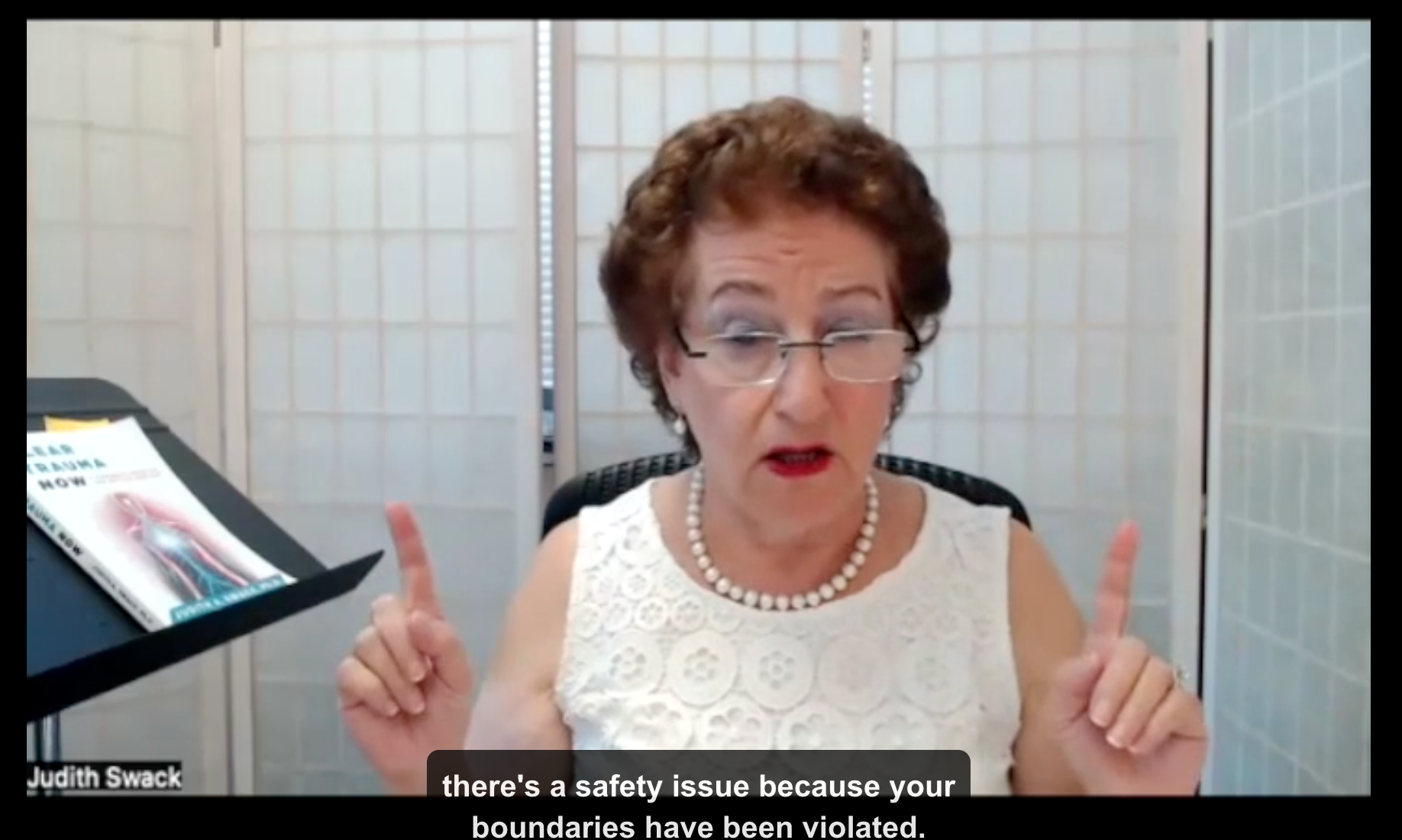
Judith A. Swack, Ph.D., is a biochemist/immunologist, Master NLP practitioner, mind/body healer, best-selling author, and leader in the field of Energy Psychology. Dr. Swack is the originator of Healing from the Body Level Up® (HBLU®), an innovative and powerful methodology with transformative results. HBLU integrates biomedical science, psychology, hypnosis, NLP, applied kinesiology, Energy Psychology, and spiritual techniques with original research on the structure of complex damage patterns.
She has presented her dramatic results on national television and at international conferences and has published in scientific, professional, and popular books and journals. Dr. Swack is a recipient of the 2015 Association for Comprehensive Energy Psychology (ACEP) award for major contribution to the field of Energy Psychology and authored the chapter Healing from the Body Level Up in the industry-defining publication Energy Psychology in Psychotherapy: A Comprehensive Source Book.
Her latest book is Clear Trauma Now: A Powerful Solution for Getting Unstuck.
Dr. Swack offers monthly live trauma healing webinars, professional training in HBLU, and works with clients in person and by Zoom.
HBLU, Inc.
56 Pickering St., Needham, MA 02492
781-444-6940
https://hblu.org/